

Freshly selected for the British Fashion Council’s prestigious NEWGEN programme, Francesca Lake is emerging as one of the most compelling new voices in London fashion. Drawing on Jamaica’s social history, cultural rituals and everyday realities, she uses clothing as a powerful tool for storytelling, creating work that sits at the intersection of fashion, art and identity.
For Francesca Lake, fashion is never just about clothes. The Kingston-raised designer approaches garments as vessels for memory, identity and cultural storytelling, drawing inspiration from the histories, rituals and contradictions that shape contemporary Jamaican life. Working across fashion, film, installation and ceramics, she has developed a distinctive practice that blurs the boundaries between disciplines while remaining deeply rooted in place.
Recently selected for the British Fashion Council’s prestigious NEWGEN programme and joining the official London Fashion Week calendar, Lake is entering a new chapter in her career. Yet her focus remains unchanged: creating work that challenges inherited narratives and offers a more nuanced representation of Jamaica and its diaspora. We spoke with her about storytelling, cultural identity, creative freedom, and what it means to build a fashion language that is both deeply personal and unmistakably Jamaican.
Your work moves between fashion, film, installation and storytelling. Do you see yourself as a fashion designer, or does that definition feel too narrow?
I see myself from a broader understanding of what it is to be a designer, more as an artist who uses fashion and garment construction to tell stories and explore the relationship between the body/wearer and story being told. While fashion is the main vehicle used, exploring other creative outlets helps to inform the bigger picture of the narrative that add to a holistic assessment of the themes being investigated.
Jamaica seems deeply present in your practice. What are the images, memories or sensations from there that continue to return in your work?
Jamaica is my work. It is the core of my practice. Analyzing the socio-economic landscape, its origins and present-day manifestations, while using my experiences and academia to represent a modern take on the culture through garment construction forms the basis of my design language.
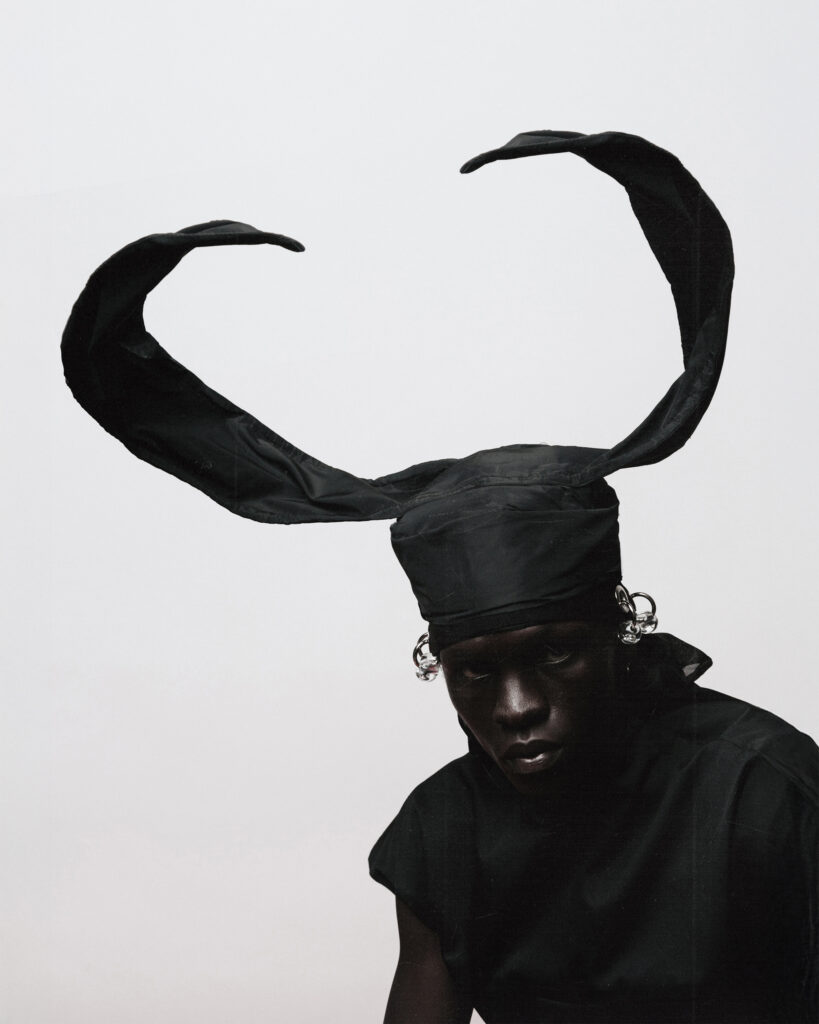
You often build narratives around identity and cultural transmission. What stories do you feel still remain untold?
The lens through which I view the world I live in is social subversion by exploring opposites and intersections. So subject matters from macro to micro, that could space/institution to emotion such as vulnerability, can continuously be investigated from the perspective of my lived experience and thus continue to provide stories within a deeply rich culture yet to be explored.
There is something very cinematic in the way you construct images. Are there filmmakers, photographers, writers or artists who have shaped your visual language?
I continue to be inspired by Jamaican creatives, from the late sculptor Gene Pearson, artists Richard Hall and Ken Spencer and playwright Trevor Rhone. Using multiple disciplines with focus on fashion to explore and address themes of class, tradition and social norms that adopt satire and provocation in order to challenge the status quo.
What does a city give you creatively: people, architecture, rhythm, colours, conversations… or something less visible?
The most important thing a city can give you is the intangible; it is its’ energy, the nuances that make that experience unique, distinctive and individual. My job as a creative is to give tangibility to that feeling and emotion.
Fashion today often moves very fast. Your work feels slower, more reflective. Is slowness a form of resistance for you?
While the story is inherently a form of fashioning resistance, because of the depth of a continuing investigation, it innately becomes slower paced and more gradual.
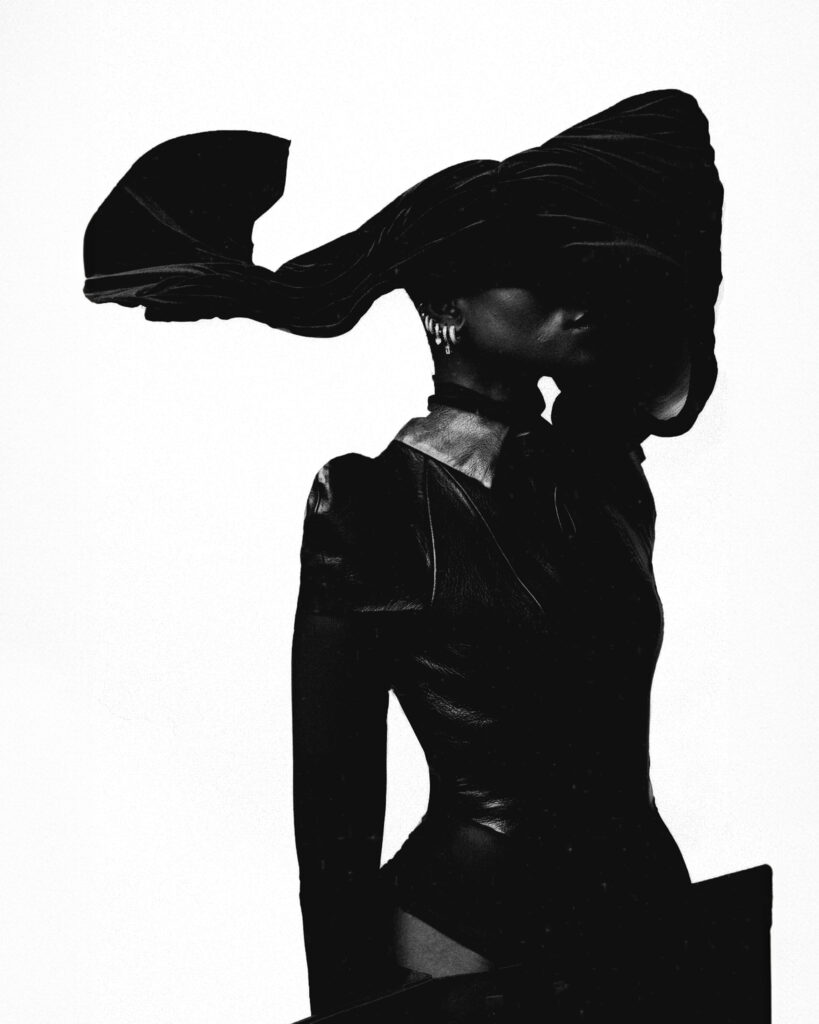
Are there materials, gestures or traditional techniques that you feel particularly attached to?
I appreciate the relationship and juxtaposition between the rigidity of woven fabric and making it malleable through fabric manipulation.
If you had to introduce someone to your world through one garment, one image and one place, what would you choose?
My early visual expression while studying at Central Saint Martins during partial lockdown of Covid-19 in February 2021, was the Taffeta Indecent Church Dress from my initial exploration on Church and the Dancehall. This work speaks to the creative audacity I hope to maintain throughout design language.
Looking ahead, what territories (creative, emotional or geographical) would you still like to explore?
I’ve started my journey by exploring the idea of space and institutions within the context of class and classlessness from a more peripheral perspective. Going forward, I hope to continue this analysis through a more microscopic and emotional lens.